Dates
Berlin Wall 1961-1989
Cold War 1947-1991
Iraq War 2003-2011
Afghanistan War 2001-present
Korean War 1950-1953 (present)
Sputnik 1957
State of Israel 1948
Chinese Cultural Revolution 1966-1976
Vietnam War 1955-1975
United Nations Created 1945
WWII 1939-1945
Bolshevik Revolution (October Revolution) 1917
Founding of the People’s Republic of China 1949
Truman Doctrine 1947
Allegory of the Olive
Tree (Jacob 5)
What does the Allegory of Olive Tree have to do with the
study of world history? How does the Allegory show us what the Lord cares about
in world history?
The history of the world in the Allegory of the Olive Tree
shows us what Christ considers to be the most important parts of the story. The
allegory describes four visits the Lord of the vineyard (world) makes to the
vineyard. Can you describe what happens in each?
We are living in the period of time described in Jacob
5:49-75, a period of time in which the House of Israel is being
gathered—through missionary work and family history/temple work—in preparation
for the Second Coming of Christ and the Millennium. Which verses talk about
gathering? Which talk about the Millennium?
What does the prophecy from Malachi about the coming of
Elijah have to do with the gathering discussed in Jacob 5? Why is it
significant that in talking about family history we also use the analogy of a
family tree?
Don’t confuse the House of Israel with the State of Israel;
in this allegory the tree represents the people of the covenant, or in other
words, those who have entered into the covenant of baptism. The House of Israel
had been scattered throughout the world, and now the righteous are being
gathered from around the world.
Even as the Lord gathers, He is also gradually separating
the good branches from the bad. How does this apply to the world we live in
today? In what ways do you see the Lord pruning and nurturing the vineyard?
How does the allegory develop the theme of the love and
patience of the Lord of the vineyard?
If the olive tree is not only a symbol for the covenants of
the House of Israel, but also for the Lord. Remember, the olive tree is a
symbol for Christ’s atonement: olive oil is used for anointing and “Christ”
means “Anointed One”; the tree of life is a symbol for the love of Christ (see
1 Nephi 11:25); Gethsemane means “olive press” and was the location where
Christ suffered for the sins of mankind; the cross is referred to as a tree in
scripture (see Acts 5:30); some olive trees are thousands of years old and as evergreens
may be considered symbols of the eternal life Christ offers us through His
atonement.
Middle East
What are the basic beliefs and practices of Islam? (Muhammad,
Qu’ran, Angel Gabriel, 5 Pillars and 6 Articles of Faith, view of Jesus)
What are the origins of the Shia/Sunni division in Islam?
How do latter-day saints view Muhammad? (see article)
Where did boundary conflicts in the Middle East today
originate? (Ottoman Empire, United Nations, British and French Mandates, ethnic
boundaries, caliphate)
Explain the Palestinian-Israeli Conflict from both sides.
(Western Wall/Dome of the Rock, Jerusalem, Holocaust, Abrahamic descent, land
ownership/purchases, compromise?, Arab nations attack on Israel in 1948)
What is Islamic Extremism and what are its methods? How does
it differ from moderate Islam? (terrorism vs. gradualism, 9/11, War in
Afghanistan, meaning of “Islam”, sharia law, difference between Islamism and
Islam)
What was the Arab Spring and what role did social media play
in it? (Arab world includes North Africa, Tunisia, awareness, organize
resistance, crackdown in Egypt)
What role do technology and social media play in building
the kingdom of God? (Elder Bednar’s talk, guest speaker Mrs. Rutherford)
Compare and contrast U.S. intervention in Iraq and Iran.
(Saddam Hussein, weapons of mass destruction, CIA actions helping Saddam into
power, CIA actions in Iraq-Iran War, Iranian Revolution, Ayatollah Khomeini,
Iranian tensions with U.S.)
How have U.S. interventions in the Middle East added fuel to
the Islamicist fire? How do Islamicists use social media to spread their
message? (financial support, recruitment, spread ideology, spread terror)
Marxism
Who wrote the Communist Manifesto? When? Where? Why?
What was Marx’s communist utopia like?
According to Marx, how would the world arrive at his utopia?
(consider both the role of the Proletarian Revolution and the 10 steps of
socialism)
Evaluate Marx: what half-truths does he teach?
How does a market economy respond better to information than
a command economy?
Communist China
How was the People’s Republic of China created? (Mao,
Nationalists, Taiwan, Chinese Civil War)
Which of Mao’s policies show that he was imitating the
Soviet Union? What were the outcomes of those policies?
What was the Cultural Revolution? Why did Mao institute it
in 1966 when communism had already been in power in China since 1949? What role
did education play in the Cultural Revolution? Why would Mao claim the
government in China is democratic?
Be prepared to interpret a propaganda poster.
How did the policies of Deng Xiaoping create a hybrid form
of communism in China?
How is capitalism changing China, for good and for bad? Why
do some Chinese intellectuals believe that consumerism will help China’s
government become more open and democratic (in the Western sense of the word)?
Rise of the Soviet
Union
What were the causes of the February Revolution in Russia?
(WWI, Tsar Nicholas II, Rasputin)
Who were the key players and what did they do in the October
Revolution? (Lenin, Trotsky, Germany in WWI, Bolsheviks, interim government,
soviets)
Why is Stalin considered a hero by many Russians today and a
villain by many in the world? (kulaks, secret police, gulags, 5 year plans,
show trials and purge, collectivization, U.S.S.R.)
Cold War Beginnings
What was the cold war? Between who? Why? When? How?
(Superpowers, satellite states, iron curtain, conflicting ideologies, NATO,
Warsaw Pact)
What were the Marshall Plan and the Truman Doctrine? How has
the Truman Doctrine influenced U.S. foreign policy since then?
Describe the arms race and space race. How did they get
started and why? (Sputnik, Atom Bomb, Hydrogen Bomb, mutually assured
destruction, Reagan’s “Star Wars” and defense spending) How was the space race
related to the “moon walk” in Beijing Olympics Opening Ceremonies?
Tell the story of the division of Berlin. How did it begin?
What was the Berlin Airlift? How did the wall get built and how did it get torn
down? How was the wall a symbol of the Cold War?
Cold War Hot Spots:
Vietnam War, Korean War, Cuban Missile Crisis
Describe the Korean War: who, what, when, where, why. What
are the long-term consequences for Korea? How did the guest speaker, Mrs.
Adams, give another perspective on this war? (Kim Il Sung, 38th Parallel,
Seoul, Pyongyang, United Nations, China, North Korea, proxy war)
United Nations
What is the United Nations? (General Assembly, Security
Council, International Court of Justice, League of Nations failure, WWII end)
What are the four stated purposes of the United Nations in
the Preamble to its Charter?
Why do some consider the existence of the United Nations a
threat to national sovereignty? What does the Michael Brown appeal to the UN
demonstrate about national sovereignty?
Why might it be better for the U.S. to act under UN
authority than by carrying out police actions by itself?
If the UN were to gain the power to tax or to create a world
currency, how might it morph into a socialist government? What does the UN’s
support for the Rights of the Child demonstrate about the dangers of the social
progress goal of the UN?
Fall of the Soviet
Union
What was life like in the Soviet Union in the 1970s and 80s?
What do the long-term fruits of communism in the Soviet Union demonstrate about
communism?
How did Gorbachev’s reform policies of glasnost and
perestroika contribute to the downfall of the Soviet Union?
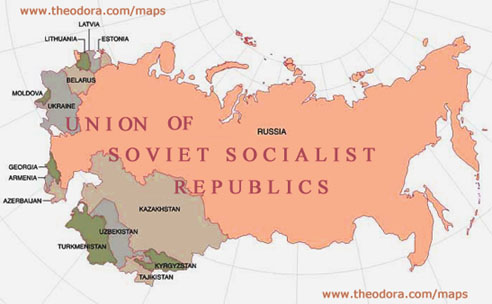
Name some modern-day countries that were once a part of the
Soviet Union. What do Putin’s recent actions in the Ukraine portend for other
former members of the U.S.S.R.?
WWII---In the Pacific
What was it like for the Japanese at Hiroshima to experience
the first atomic bomb? Describe the Japanese military mindset during WWII. How
did the history of the Japanese contribute to this mindset? Why did American
military leaders believe the atomic bomb was necessary?