Monday, December 15, 2014

The Art of Living Dec. 15

Instead of a bellwrite, students added up their scores for Bellwrites #31-40. They wrote their total score at the top of the page for Bellwrite #40 and circled the number.

Today we finished reading Man's Search for Meaning. As we read, we discussed Frankl's idea that instead of asking what the meaning of life is, we should consider what life is asking of us. Each moment we have an opportunity to answer that question, and in this lies the art of living.
A student in class pointed out that, "Meaning is a personal decision."

We also discussed Frankl's thoughts on faith and hope (though he does not use those words to describe them). We talked about how we can look forward to a meaningful future and how that can give meaning to how we answer the present moment with our lives. Even as Frankl says the prisoners could choose not to mentally escape the present by living in the past, he also says they need to live for something in the future. Is this a contradiction? We need to live meaningfully in the present moment, yet we must also live for the future?

We also questioned Frankl's statement that no one can suffer for us. Certainly there is some suffering that we must experience to grow into our potential; however, we also know that Christ has suffered for us, individually.

Homework:
  • Two articles due tomorrow (Hiroshima and Spirit Warriors)
  • Comma quiz tomorrow
  • Study for history final exam on Wednesday
  • Final personal reflection essay on Man's Search for Meaning is due Thursday

Friday, December 12, 2014

Cold War Quiz Part 2

  1. Explain MAD.
  2. Put the following leaders in order:
    1. Gorbachev
    2. Putin
    3. Stalin
    4. Lenin
    5. Khrushchev
  3. What was Sputnik and why did it matter?
  4. What happened at the Bay of Pigs?
  5. How did JFK resolve the Cuban Missile Crisis?
  6. Who was Ho Chi Minh?
  7. Name one of the consequences of the Vietnam War?
  8. Name 3 of the fruits of communism in the Soviet Union which we discussed in class.
  9. What is ironic about the U.S. involvement in the Soviet-Afghan War?
  10. What was the effect of glasnost on the Soviet Union?
  11. Why was it significant that the Soviet Union developed the atomic bomb in 1949?
  12. What two foreign countries governed Vietnam prior to the Vietnam War?
  13. What is the historical significance of the Cuban Missile Crisis?
  14. What were the Pentagon Papers and why did they matter?

Thursday, December 11, 2014

Personal Reflection Essay on Man's Search for Meaning


Prompt: What have you learned about the meaning of suffering as you have read and pondered the book? How is it changing the way you understand the meaning of your own suffering? How is it changing your understanding of the Atonement of Christ?


What I really care about in this essay is that you get beyond the easy answers and gain deeply-felt insight. Make it personal. Draw on what Frankl says. Draw on scripture. Draw on what you observed from your response-to-suffering log.


Requirements:

·        MLA format

·        Length 500-750 words

·        Have a parent or trusted adult initial that they have read and given you feedback.

·        Due: Thursday, Dec. 18

Preparing for the end of Term Dec. 11

Writing Portfolio
Today we studied some tips for writing dialogue in short fiction.

Core
Bellwrite #41: Describe and effective approach to studying for a final exam. What do you intend to do to prepare for your history final?

Students have received a study guide for their history final exam. They should begin preparing immediately. The final exam will be Wednesday, Dec. 17.

We are continuing to read Man's Search for Meaning in class. As we read, we are identifying vocabulary words together on which students will be quizzed upon completion of the book. This will take the place of the individual spelling/vocabulary plans. Students received a writing prompt for their final personal reflection essay on Man's Search for Meaning (see separate post). This essay is due on the last day of school before Christmas break (Thursday, Dec. 18).

For the past two days in class, students have completed proofreading exercises that focus on the following: colon use, semicolon use, comma use, correcting sentence fragments and run-ons, and correcting faulty parallelism in lists.  We will do one more practice exercise before a quiz.

For history, students have two more readings to complete this term. They received one of these today: excerpts from Hiroshima  by John Hersey. This book follows the lives of 6 individuals living in Japan at the time of the Hiroshima atomic bomb. The excerpts we are reading follow the lives of 2 of these individuals. The purpose of this reading is to help students understand the impact of nuclear weapons. It should also raise a question, "Why did the U.S. military leaders feel it was necessary to use such a weapon on Japan at the close of WWII?"

The second reading students will complete should help answer this question. It is an excerpt from the book, Flyboys by James Bradley. The excerpt helps students understand the mindset of Japan's emperor Hirohito as well as the Japanese soldiers who were "trained" in a most brutal manner. This reading should help students understand why U.S. officials may have felt the atom bomb was the best option for ending the war in the Pacific Theater. Students will receive this reading tomorrow.

Homework:
  • Study for history final.
  • Work on reading excerpt from Hiroshima.
  • Continue reflecting on the meaning of suffering in their own lives.

Final Exam Study Guide

Dates
Berlin Wall 1961-1989
Cold War 1947-1991
Iraq War 2003-2011
Afghanistan War 2001-present
Korean War 1950-1953 (present)
Sputnik 1957
State of Israel 1948
Chinese Cultural Revolution 1966-1976
Vietnam War 1955-1975
United Nations Created 1945
WWII 1939-1945
Bolshevik Revolution (October Revolution) 1917
Founding of the People’s Republic of China 1949
Truman Doctrine 1947


Allegory of the Olive Tree (Jacob 5)
What does the Allegory of Olive Tree have to do with the study of world history? How does the Allegory show us what the Lord cares about in world history?

The history of the world in the Allegory of the Olive Tree shows us what Christ considers to be the most important parts of the story. The allegory describes four visits the Lord of the vineyard (world) makes to the vineyard. Can you describe what happens in each?

We are living in the period of time described in Jacob 5:49-75, a period of time in which the House of Israel is being gathered—through missionary work and family history/temple work—in preparation for the Second Coming of Christ and the Millennium. Which verses talk about gathering? Which talk about the Millennium?

What does the prophecy from Malachi about the coming of Elijah have to do with the gathering discussed in Jacob 5? Why is it significant that in talking about family history we also use the analogy of a family tree?

Don’t confuse the House of Israel with the State of Israel; in this allegory the tree represents the people of the covenant, or in other words, those who have entered into the covenant of baptism. The House of Israel had been scattered throughout the world, and now the righteous are being gathered from around the world.

Even as the Lord gathers, He is also gradually separating the good branches from the bad. How does this apply to the world we live in today? In what ways do you see the Lord pruning and nurturing the vineyard?

How does the allegory develop the theme of the love and patience of the Lord of the vineyard?

If the olive tree is not only a symbol for the covenants of the House of Israel, but also for the Lord. Remember, the olive tree is a symbol for Christ’s atonement: olive oil is used for anointing and “Christ” means “Anointed One”; the tree of life is a symbol for the love of Christ (see 1 Nephi 11:25); Gethsemane means “olive press” and was the location where Christ suffered for the sins of mankind; the cross is referred to as a tree in scripture (see Acts 5:30); some olive trees are thousands of years old and as evergreens may be considered symbols of the eternal life Christ offers us through His atonement.

Middle East

What are the basic beliefs and practices of Islam? (Muhammad, Qu’ran, Angel Gabriel, 5 Pillars and 6 Articles of Faith, view of Jesus)

What are the origins of the Shia/Sunni division in Islam?

How do latter-day saints view Muhammad? (see article)

Where did boundary conflicts in the Middle East today originate? (Ottoman Empire, United Nations, British and French Mandates, ethnic boundaries, caliphate)

Explain the Palestinian-Israeli Conflict from both sides. (Western Wall/Dome of the Rock, Jerusalem, Holocaust, Abrahamic descent, land ownership/purchases, compromise?, Arab nations attack on Israel in 1948)

What is Islamic Extremism and what are its methods? How does it differ from moderate Islam? (terrorism vs. gradualism, 9/11, War in Afghanistan, meaning of “Islam”, sharia law, difference between Islamism and Islam)


What was the Arab Spring and what role did social media play in it? (Arab world includes North Africa, Tunisia, awareness, organize resistance, crackdown in Egypt)

What role do technology and social media play in building the kingdom of God? (Elder Bednar’s talk, guest speaker Mrs. Rutherford)

Compare and contrast U.S. intervention in Iraq and Iran. (Saddam Hussein, weapons of mass destruction, CIA actions helping Saddam into power, CIA actions in Iraq-Iran War, Iranian Revolution, Ayatollah Khomeini, Iranian tensions with U.S.)

How have U.S. interventions in the Middle East added fuel to the Islamicist fire? How do Islamicists use social media to spread their message? (financial support, recruitment, spread ideology, spread terror)


Marxism

Who wrote the Communist Manifesto? When? Where? Why?

What was Marx’s communist utopia like?

According to Marx, how would the world arrive at his utopia? (consider both the role of the Proletarian Revolution and the 10 steps of socialism)

Evaluate Marx: what half-truths does he teach?

How does a market economy respond better to information than a command economy?


Communist China

How was the People’s Republic of China created? (Mao, Nationalists, Taiwan, Chinese Civil War)

Which of Mao’s policies show that he was imitating the Soviet Union? What were the outcomes of those policies?

What was the Cultural Revolution? Why did Mao institute it in 1966 when communism had already been in power in China since 1949? What role did education play in the Cultural Revolution? Why would Mao claim the government in China is democratic?

Be prepared to interpret a propaganda poster.

How did the policies of Deng Xiaoping create a hybrid form of communism in China?

How is capitalism changing China, for good and for bad? Why do some Chinese intellectuals believe that consumerism will help China’s government become more open and democratic (in the Western sense of the word)?


Rise of the Soviet Union

What were the causes of the February Revolution in Russia? (WWI, Tsar Nicholas II, Rasputin)

Who were the key players and what did they do in the October Revolution? (Lenin, Trotsky, Germany in WWI, Bolsheviks, interim government, soviets)

Why is Stalin considered a hero by many Russians today and a villain by many in the world? (kulaks, secret police, gulags, 5 year plans, show trials and purge, collectivization, U.S.S.R.)


Cold War Beginnings

What was the cold war? Between who? Why? When? How? (Superpowers, satellite states, iron curtain, conflicting ideologies, NATO, Warsaw Pact)

What were the Marshall Plan and the Truman Doctrine? How has the Truman Doctrine influenced U.S. foreign policy since then?

Describe the arms race and space race. How did they get started and why? (Sputnik, Atom Bomb, Hydrogen Bomb, mutually assured destruction, Reagan’s “Star Wars” and defense spending) How was the space race related to the “moon walk” in Beijing Olympics Opening Ceremonies?

Tell the story of the division of Berlin. How did it begin? What was the Berlin Airlift? How did the wall get built and how did it get torn down? How was the wall a symbol of the Cold War?


Cold War Hot Spots: Vietnam War, Korean War, Cuban Missile Crisis

Describe the Korean War: who, what, when, where, why. What are the long-term consequences for Korea? How did the guest speaker, Mrs. Adams, give another perspective on this war? (Kim Il Sung, 38th Parallel, Seoul, Pyongyang, United Nations, China, North Korea, proxy war)


United Nations

What is the United Nations? (General Assembly, Security Council, International Court of Justice, League of Nations failure, WWII end)

What are the four stated purposes of the United Nations in the Preamble to its Charter?

Why do some consider the existence of the United Nations a threat to national sovereignty? What does the Michael Brown appeal to the UN demonstrate about national sovereignty?

Why might it be better for the U.S. to act under UN authority than by carrying out police actions by itself?

If the UN were to gain the power to tax or to create a world currency, how might it morph into a socialist government? What does the UN’s support for the Rights of the Child demonstrate about the dangers of the social progress goal of the UN?


Fall of the Soviet Union

What was life like in the Soviet Union in the 1970s and 80s? What do the long-term fruits of communism in the Soviet Union demonstrate about communism?

How did Gorbachev’s reform policies of glasnost and perestroika contribute to the downfall of the Soviet Union?

Name some modern-day countries that were once a part of the Soviet Union. What do Putin’s recent actions in the Ukraine portend for other former members of the U.S.S.R.?

WWII---In the Pacific

What was it like for the Japanese at Hiroshima to experience the first atomic bomb? Describe the Japanese military mindset during WWII. How did the history of the Japanese contribute to this mindset? Why did American military leaders believe the atomic bomb was necessary?

Tuesday, December 9, 2014

Dec. 9

Writing Portfolio
We read some short stories to learn from their craft.

Core
Instead of a bellwrite, please complete the proofreading exercise with a neighbor.

Students took a quiz on the Cold War. We also read from Man's Search for Meaning (Class A through page 32, Class B page 31).

No new homework. Response-to-suffering log due Thursday.

Monday, December 8, 2014

Vietnam and Concentration Camps Dec. 8

Bellwrite #40:
1) The Allegory of the Olive Tree talks about the fulfilling of the Lord's covenants with the House of Israel through gathering. How does the story of the Cold War relate to the gathering of Israel?
2) How does the Cold War relate to FACE principles #2 and #7?

Today we reviewed the main causes and outcomes of the Vietnam War. We discussed how Vietnam was a French colony prior to WWII. During the war, when France surrendered to Germany, it lost control of its colonies and Japan took over in Vietnam. However, when Japan lost WWII and France tried to reassert control in Vietnam, many Vietnamese rebelled. They were ready for self-rule (nationalism). During the ensuing war between Vietnam and France, Vietnam ended up split with the northern half governed from its capital in Hanoi by a communist/nationalist government led by Ho Chi Minh and the southern half governed from its capital in Saigon by a government favored by western nations. The US wasn't so much in favor of the Southern government as it was opposed to the spread of communism from the North. Thus from the outset, Americans misunderstood the real motive of the Vietnamese in the war: to gain independence (not, as they supposed, to spread communism).

The war dragged on for 20 years, due in large part to the nature of the guerilla warfare waged by the Vietcong (guerilla army in the South which supported Ho Chi Minh's cause). Meanwhile, Americans lost faith in their government and their cause. The counterculture movement in America questioned almost all traditional American values and institutions. The war became more and more unpopular as news revealed that American soldiers were committing atrocities and the U.S. government had lied to its citizens (Pentagon Papers). The draft was also a concern to Americans who felt it was unjust that 18 year-olds could be drafted but couldn't even vote (by the way, this was when the voting age was changed). When American troops withdrew from Vietnam, the North invaded the South, uniting the country under a communist government. Neighboring Cambodia and Laos were plunged into chaos, including acts of genocide. Vietnam is still communist today, though reforms have led it in recent years to integrate into the world economy and form diplomatic relations with most countries.

Why did the U.S. fight such an expensive war to try to stop communism in such a small country? In part, this is due to the Domino Theory--the idea that if one nation in the vulnerable Southeast Asia were to fall to communism, it would take the others down with it. For these reasons, Vietnam is considered a proxy war through which the superpowers could indirectly combat each other's ideologies of communism and capitalism/democracy.

We read together from Man's Search for Meaning. We discussed for comprehension, as well as studying the following vocabulary words (including studying their Greek/Latin roots):
apathy
objectivity/subjectivity
mortification

Homework:
No new homework. The Response-to-Suffering Log is due Thursday (Extended deadline was granted due to a student request for more time to make the assignment meaningful. This decision was announced Friday. Apologies to students who did not get the message.)

Thursday, December 4, 2014

Vietnam Dec. 4

Writing Portfolio

Students had time to write their first scenes for their short stories. Scenes need to be written in the deepest level of the Pyramid of Abstraction. They should be typed, double-space, approximately 2-4 pages.

Core
Bellwrite#39: What stood out to you from the article on the LDS Church and the Berlin Wall? Do you think there is a connection between the construction of the Freiberg Temple and the fall of the Wall?

We finished considering the fall of the Soviet Union. Class A took a history quiz. Students worked with their partners to answer questions from the "menu" about the Vietnam War.

Homework:
  • Memorization due tomorrow.
  • Spelling/vocab check tomorrow.
  • Scene 1 of your short story is due tomorrow.
  • Response-to-Suffering Log due Monday.
  • Vietnam "Menu" Questions due Monday (one paper per partnership).


Wednesday, December 3, 2014

Fall of the Soviet Union Dec. 3

Bellwrite #38: How well are you accomplishing your goals for your spelling/vocabulary proposal? Are you actually improving? What adjustments do you need to make to how you are implementing your proposal?

Class B took a small history quiz. I presented key events of the Cold War:

Division of Germany/Berlin at the end of WWII
Marshall Plan
Formation of NATO
Arms Race
MAD
Sputnik (Space Race)
Korean War
Khrushchev
Berlin Wall
Cuban Missile Crisis
Vietnam
life in the 1970s-80s in the Soviet Union
  1. pollution
  2. grain shortages
  3. shrinking economy
  4. low quality consumer goods and inefficient distribution
  5. housing and quality of life
  6. censorship and misinformation
Afghan-Soviet War
Gorbachev's attempted reforms (glasnost and perestroika)
Satellite revolutions of 1989
Collapse

Homework:
  • Read the article "The LDS Church and the Berlin Wall" by tomorrow.
  • Full Jacob 5 memorization due Friday
  • Spelling/vocab check on Friday
  • Short story, scene 1 due on Friday

Tuesday, December 2, 2014

Suffering Dec. 2

Writing Portfolio

Pyramid of abstraction continued: We continued our work with understanding the pyramid of abstraction. After reviewing the first two thresholds (5 senses and scene), we discussed the next two (dialogue--both internal and external, and gesture). Students used the pyramid to begin writing the first scenes of their short stories.

Core
Bellwrite #37: What is suffering? Describe a recent time when you suffered. How did you respond--behaviorally and mentally--to your suffering?

Students passed off part 6 of their memorization.

We discussed the Response to Suffering Log assignment. We also read together from Man's Search for Meaning.

We reviewed the cold war maps and I shared part of a presentation on the Cold War.

Homework:
  • Begin working on the Response-to-Suffering  log (due Monday).
  • First scene of short story is due on Friday.

Monday, December 1, 2014

Mapping the Cold War Dec. 1

No bellwrite today. Instead, please work on the memorization. Part 6 will be due tomorrow.

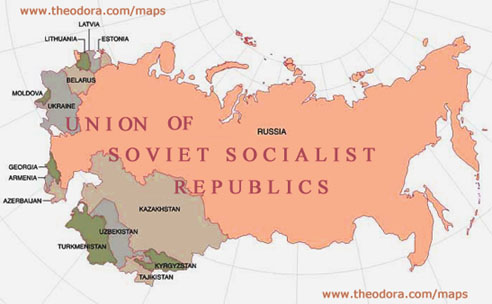
In class, students colored/labeled maps to help them understand the "lay of the land" during the Cold War. We considered a map that shows the members of the two alliances during the Cold War: NATO (North Atlantic Treaty Organization) and the Warsaw Pact (Please note that the United States is still a member of NATO today). We noted that Germany was divided. We discussed how the location of Berlin within East Germany made West Berlin into an "island" which was cut off, leading to the Berlin Airlift. We also noted that this division would later lead to the construction of the Berlin Wall. We also looked at a map that shows the modern-day countries that were part of the Soviet Union. We noted that Ukraine was once part of the Soviet Union. The Crimean Peninsula was given to Ukraine by Russia in the 50s, but is now one of the contested territories as Putin seems to be seeking territorial enlargement. (Note, the peninsula is connected by land to the Ukraine, NOT to Russia, which means electricity, gas, water, etc. must be supplied through Ukraine.) We will continue working with these maps tomorrow. Class B began to mark some other significant locations for the Cold War, including North Korea, South Korea, Seoul, Pyongyang, the 38th Parallel, Vietnam, Hanoi. Class B also discussed the origins of the term "Third World." (NATO constituted the first world, the Warsaw Pact the second, and neutral countries the third. In the 1960s the term "third world" started being associated with characteristics of poverty, disease, pre-industrialization, and dependence on foreign aid.)

Class A took the comma quiz today. If you were absent or on the field trip, please make sure to ask me about it.

We also began reading together from our next book, Man's Search for Meaning. Students will not be writing an academic essay about this book; rather, they will be asked to write some type of personal reflection on the meaning of suffering in their lives. More details to come.

Homework: Memorize Jacob 5 part 6 for tomorrow.